27 Feb The Second IPLE Meeting of the WOMEX Project Held
27 February 2026
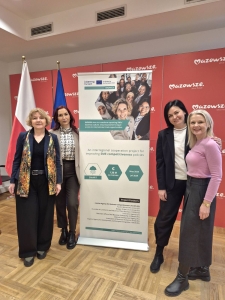
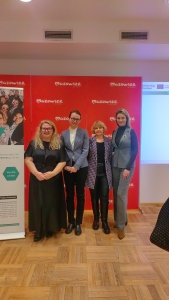
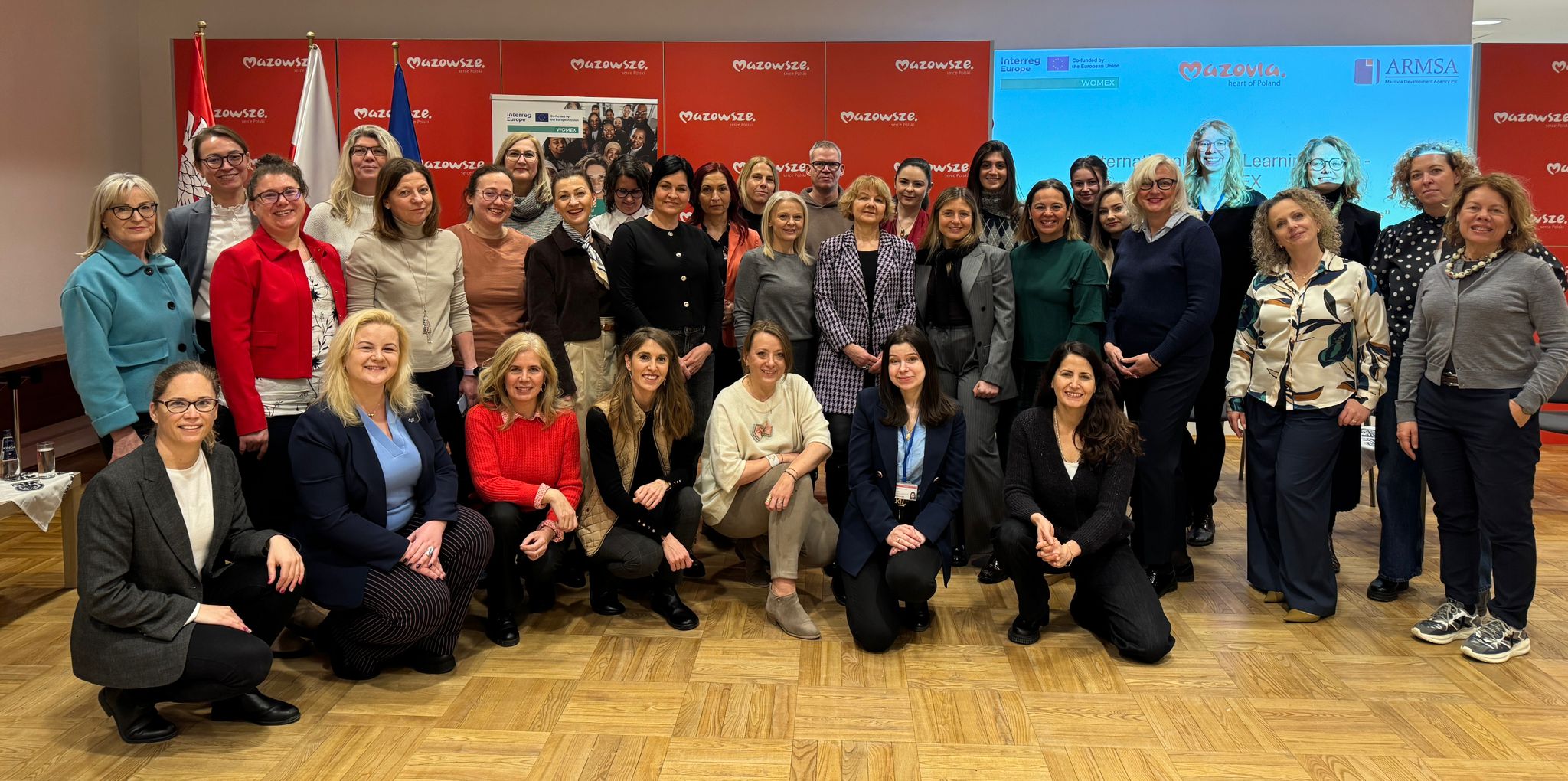
The second IPLE (International Policy Learning Event) meeting of the WOMEX project was held in Poland on 25 and 26 February 2026.
The IPLE, organized in Warsaw by the Marshal’s Office of the Mazowieckie Voivodeship and the Mazovia Development Agency, brought together nine partners—members of an international consortium from six countries—as well as stakeholders, with the aim of exchanging experiences to improve public policies and support instruments for the internationalization of women-led small and medium-sized enterprises. In addition to the Serbian project partners, the Association of Business Women in Serbia, represented by Executive Director Dragana Panajotović, and the Regional Agency for Development and European Integration RAREI, representatives of the Secretariat for Economy of the City of Belgrade also attended the meeting as stakeholders.
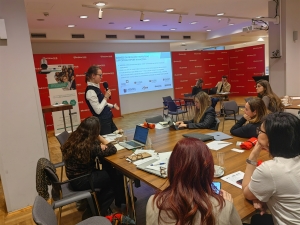
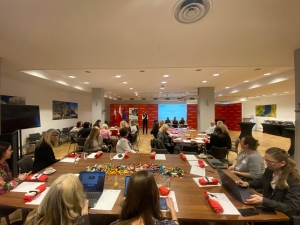
During the first day, existing regional financial instruments and their alignment with the real needs of women in export activities were discussed. Through an interactive and creative workshop, participants symbolically built a model of an ideal support system, shaping its key elements through three-dimensional representations of various financial and non-financial instruments. Each group, drawing on its own regional experience, visually presented which instruments they considered crucial for the success of women in internationalization—from financing and guarantee schemes to mentoring, cooperation networks, and access to information.
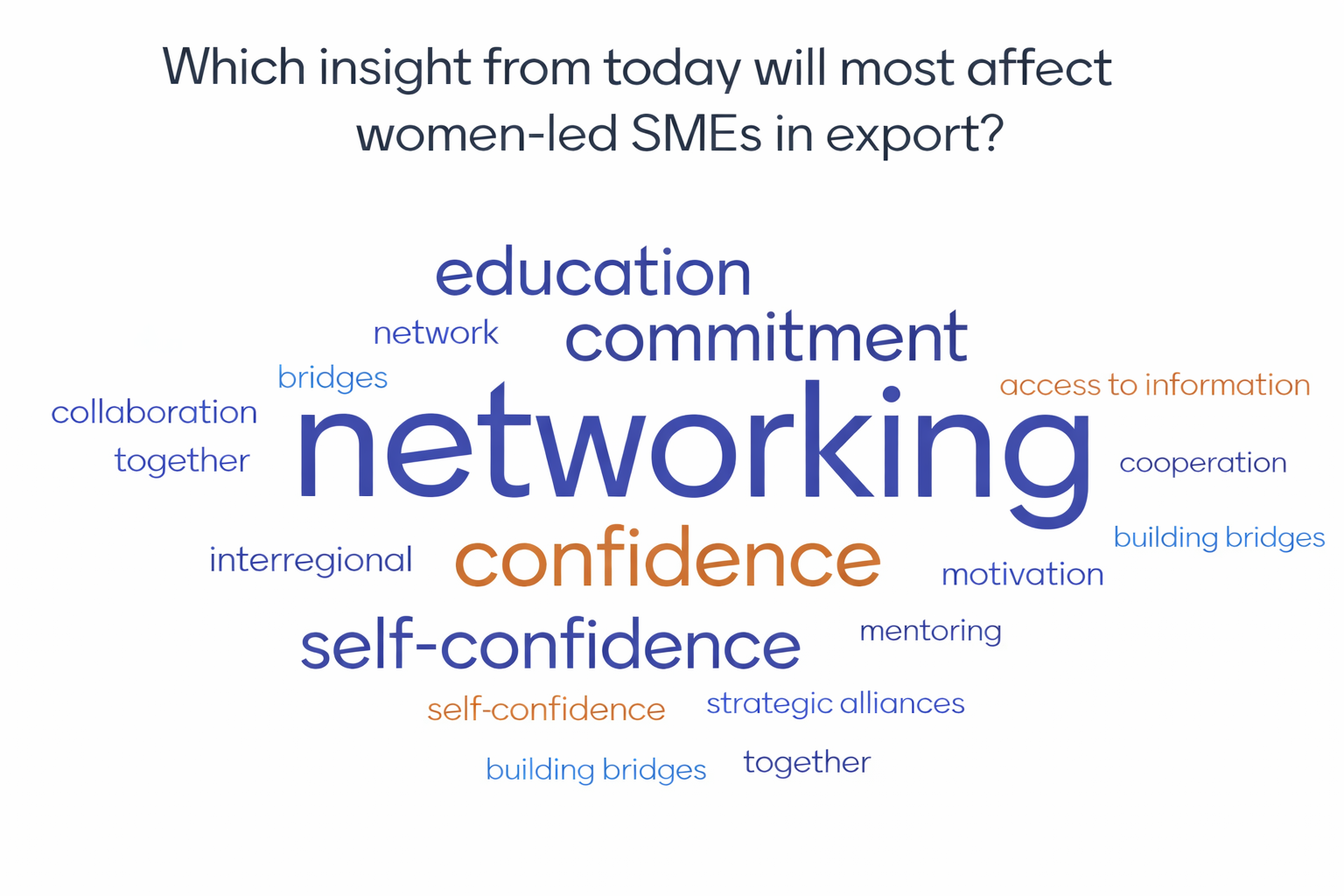
This participatory approach enabled participants to better understand the interconnection between instruments and the need for their strategic alignment. Key concepts highlighted during the first day, in addition to financial mechanisms, included networking, bridge-building, strategic partnerships, training, access to information, commitment, and self-confidence. The most frequently emphasized terms—networking, confidence, and self-confidence—further confirmed the importance of business networks and personal readiness to step into international markets.
On the first day, a Steering Committee meeting was also held, during which the lead partner, ACCIÓ – the Agency for Business Competitiveness – presented progress in the implementation of activities and outlined the next steps.
The second day began with a presentation of gender equality credit lines offered by the European Investment Bank. A representative of the Bank explained the mechanisms that enable commercial banks to allocate part of their credit portfolio to enterprises owned or led by women, thereby systematically integrating a gender perspective into financial flows.
This was followed by a presentation by the Network of Entrepreneurial Women foundation (Agata Zioło, Vice President of the Foundation, and Agnieszka Tomaszewska, Project Coordinator). Their example showcased a model of long-term support for women entrepreneurs based on mentoring, incubators, and international cooperation.
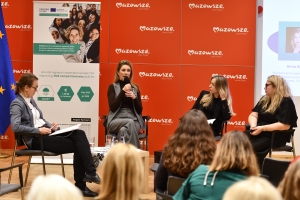
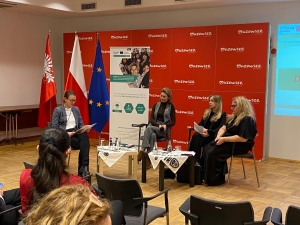
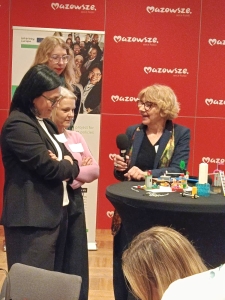
The third segment was a panel discussion featuring Ana Arslan, a corporate and commercial law attorney supporting entrepreneurs and investors in expanding business between Poland, Turkey, and the United Arab Emirates; Zofia Nojszewska, Business Development Director with many years of experience at the Polish Investment and Trade Agency; and Joana Burnos, Director of the Balkan Women’s Academy BAZA, an academy for women leaders from Bosnia and Herzegovina, Croatia, and Serbia, and a Team Europe Direct expert. The panel focused on the challenges and opportunities for women in the process of internationalization, with emphasis on strategic planning, institutional support, and strengthening self-confidence as key factors for success in international markets.
The next IPLE meeting will be held in Hungary, in Pécs, from 21 to 23 April 2026, where the results of the regional mapping and comparative interregional analysis will be presented.
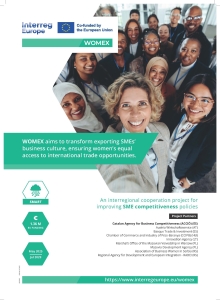
About the project: WOMEX is a European project co-financed by the Interreg Europe programme, supported by the European Union. It runs until July 2029 and aims to improve public policies and transform business culture so that equal access of women to international trade becomes an integral part of the competitiveness and sustainable growth of export-oriented SMEs.